Why Doggy Smile is More Than Just a Cute Typeface
There is a specific challenge in the world of graphic design that often goes unsaid: finding a font that is playful enough to be fun, but structured enough to actually be legible. We have all been there, scrolling through endless libraries of handwritten fonts and script fonts that look beautiful in a headline but turn into a jagged mess in a sentence. This is where Doggy Smile enters the conversation. It is a premium font that bridges the gap between whimsical illustration and functional typography. It does not just look like a pet font; it carries the energy of a happy, tail-wagging companion right into your brand identity.
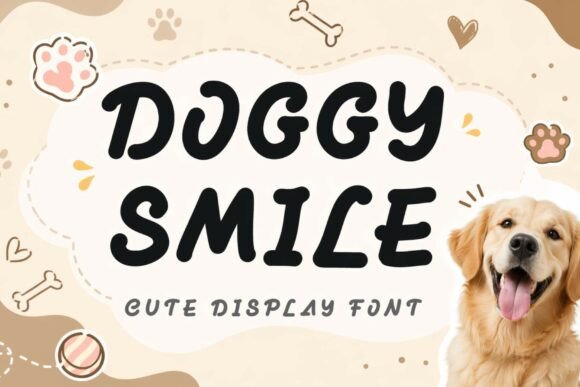
Visually, Doggy Smile is a display font that leans heavily into a rounded, friendly aesthetic. The letterforms have a softness to them, avoiding sharp corners in favor of curves that mimic the playful nature of a cartoon or a storybook. But what sets this typeface apart from other animal-themed fonts is its versatility. It includes uppercase and lowercase letters, numbers, punctuation, and even alternates. This is crucial for logo design and packaging design, where you need specific characters to have personality without looking repetitive. It supports multiple languages, making it a viable option for international projects, whether you are designing for a local pet groomer or a global children's brand.
Strategic Applications for Modern Creators
As a designer or business owner, your choice of typography speaks volumes about your brand's personality. Doggy Smile is not limited to the pet industry, although it certainly shines there. Its aesthetic fits perfectly within the visual language of fairy tales and children's books. If you are an author or a publisher, using this font for chapter titles or cover art creates an immediate emotional connection with a younger audience (and their parents). It suggests safety, fun, and imagination. In the realm of editorial design, particularly for magazines aimed at families or lifestyle topics, this font can break up the monotony of standard sans serif fonts and serif fonts, adding a spark of joy to headlines.
For the entrepreneur and the marketer, the applications are equally broad. Consider the seasonality of your marketing assets. Doggy Smile adapts beautifully to thematic campaigns. Its rounded, soft edges make it a strong candidate for spring and summer campaigns, fitting seamlessly into Easter graphics with pastel palettes. However, do not discount it for the holidays; with the right color treatment, it can work for Christmas or St. Patrick’s Day promotions, especially for brands that want to avoid the stiff, corporate look of traditional holiday typography. It is also an excellent choice for Mother’s Day merchandise or embroidery patterns, as the stroke width and clarity hold up well when digitized for physical goods.
The Impact on Visual Hierarchy and Readability
One of the most overlooked aspects of choosing a creative font is how it affects the user experience. A font is not just decoration; it is a tool for communication. Doggy Smile influences visual hierarchy by immediately drawing the eye. Because it is a display font, it commands attention in headlines and subheadings. This allows you to pair it with a clean, neutral body font—perhaps a modern sans serif font—to create a balanced layout. The contrast between the playful Doggy Smile and a structured body text ensures that your design feels professional rather than chaotic.
When considering readability, context is everything. You would not set a 500-word blog post in Doggy Smile; that is not its purpose. Its strength lies in short bursts of text: titles, slogans, call-to-action buttons, and social media overlays. In web design, using this font for hero section titles can increase engagement by setting a friendly tone immediately. For social media graphics, where you have milliseconds to capture a user's scrolling thumb, the distinctive personality of Doggy Smile helps your content stand out in a crowded feed. It signals to the audience that the content is approachable and lighthearted.
Practical Guide to Implementation and Licensing
Integrating a new font into your workflow requires a bit of strategy. First, evaluate the font pairing. As mentioned, Doggy Smile pairs best with something simple. Try combining it with a geometric sans serif font for a modern look, or a classic serif font for a storybook vibe. Avoid pairing it with other ornate script fonts or handwritten fonts, as they will compete for attention and reduce legibility.
Next, look at the included styles and alternates. A high-quality premium font like this often comes with stylistic sets. If you are designing a logo, swapping out a standard letter for an alternate can make the mark feel more custom and unique. This is particularly useful for tattoo designs or stickers, where distinctiveness is key. Always test the font in the specific medium you plan to use. Check how it renders on screen for web design and how it prints on paper or merchandise.
Finally, respect the commercial font licensing. If you are using Doggy Smile for a client project, a product for sale (like t-shirts or mugs), or digital assets, ensure you have the correct commercial license. This protects you legally and supports the type designers who create these valuable design assets. By treating typography as a strategic investment rather than a free download, you elevate the professionalism of your work and build a stronger, more consistent brand identity.
Final Thoughts on Creative Assets
In a market saturated with generic options, Doggy Smile offers a breath of fresh air. It reminds us that design can be joyful. Whether you are a crafter working on a new embroidery project, a marketer planning a seasonal campaign, or a designer building a brand for a pet-centric startup, this font provides the tools you need to communicate with warmth and clarity. It is a versatile asset that proves you do not have to sacrifice professionalism for personality.